
 English
 Español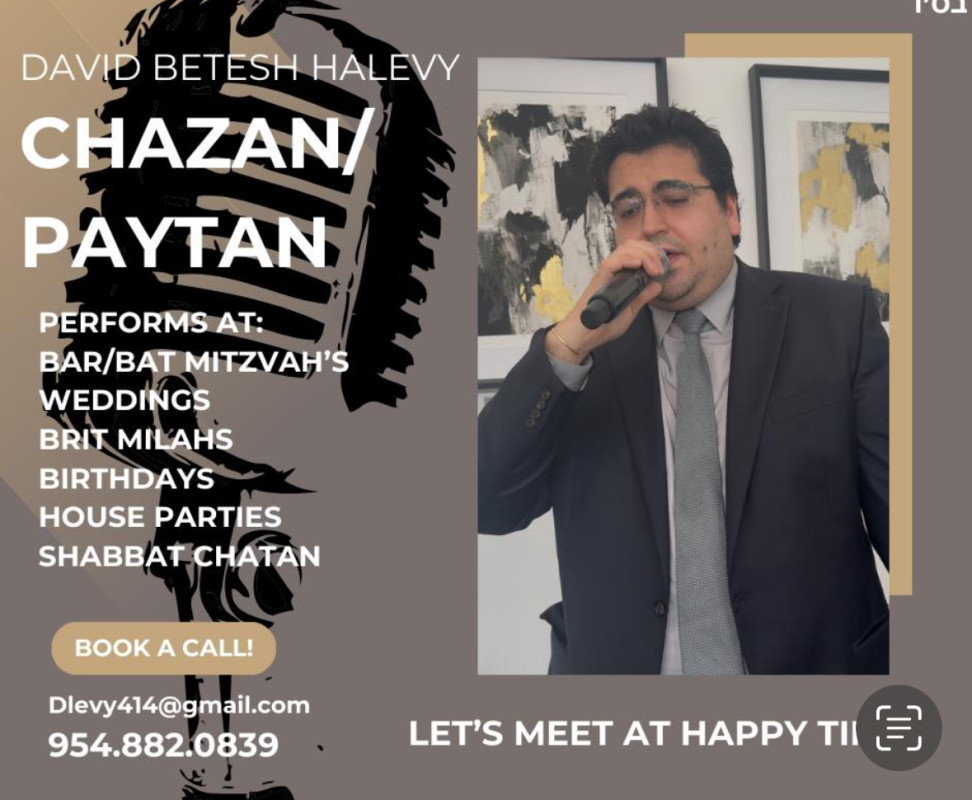
hello there my name is David Betesh I am a Sephardic Hazzan (cantor) I’m trying to put a class together where I can help people who wa to learn about Hazzanot Hebrew Sephardic melody Here's an essay on teaching Middle Eastern Hebrew music and makams to the Sephardic communityHere's the revised essay:
*Teaching the Beauty of Middle Eastern Hebrew Music: A Journey Through Makams and Melodies*
As David Betesh, a passionate teacher of Middle Eastern Hebrew music, I am excited to share the rich cultural heritage of Sephardic tradition with students who are eager to learn. Growing up in a shul where music was an integral part of worship and community life, I was inspired by the art of music and its ability to evoke emotions and create a sense of connection to the divine.
*Understanding Makams*
To truly appreciate Middle Eastern Hebrew music, one must understand the concept of makams. These melodic modes are the building blocks of the music, and each one has its own distinct character and emotional resonance. As a teacher, my goal is to help students understand the different makams, their characteristics, and how to use them to convey emotion and meaning in prayer and song.
*The Significance of Shabbat Makams*
One of the most important aspects of Middle Eastern Hebrew music is the use of a different makam for each Shabbat. This tradition is rooted in the idea that each week, we have a new opportunity to connect with the divine and express our emotions and gratitude through music. As a teacher, I will guide students through the different makams used for each Shabbat, helping them understand the themes and emotions behind each one.
*Teaching Melodies and Ornamentation*
In addition to understanding makams, students will learn the beautiful melodies and ornamentation that are characteristic of Middle Eastern Hebrew music. These melodies are often hauntingly beautiful, with intricate phrasing and expressive ornamentation. As a teacher, I will help students master these melodies, teaching them how to use ornamentation to add emotion and depth to their singing.
*Passing on a Legacy*
By teaching Middle Eastern Hebrew music and makams, I hope to pass on a legacy that has been passed down to me. Growing up in a shul where music was cherished, I was fortunate to learn from experienced cantors and musicians who taught me the intricacies of this beautiful tradition. Now, I am excited to share this knowledge with a new generation of students who are eager to learn and grow.
*Starting a New Chapter*
I am looking forward to starting this project, sharing my passion for Middle Eastern Hebrew music with students, and watching them grow in their understanding and appreciation of this rich cultural heritage. I am excited to embark on this journey, and I am confident that together, we will create a vibrant and inspiring community of musicians and worshippers.
*Conclusion*
Teaching Middle Eastern Hebrew music and makams is a privilege and a responsibility. As a teacher, I am excited to share this rich cultural heritage with students who are eager to learn and grow. Through this journey, students will gain a deeper understanding of the music, the liturgy, and the community, and will be able to connect with the divine in a meaningful and beautiful way.

Please donate to comment.
{{dame(anonymous, user, donor_name)}} | {{curr(amount,'USD')}}
{{created_at_rel}}{{note}}